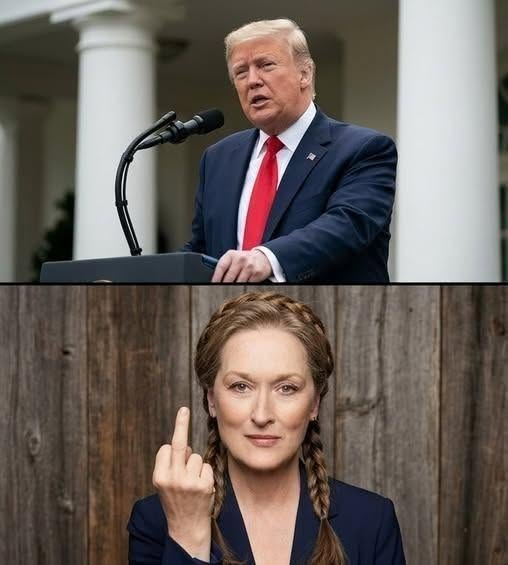
In a fictional television drama that exists entirely for satire, Hollywood icon Meryl Streep supposedly walked onto a live television set carrying a mysterious folder labeled “1970 — Wharton.”
Within seconds, the imaginary segment became the biggest conversation of the night.
According to the fictional storyline, Streep claimed the folder contained an old intelligence-test document allegedly connected to Donald Trump’s university years. The revelation immediately sent the studio audience into stunned silence.
Then came the supposed reaction from Trump.
“What Is She Talking About?”
In this satirical scenario, Trump was portrayed as responding almost instantly after hearing about the broadcast.
The fictional reaction quickly became the center of the story, with television commentators supposedly debating whether the mysterious document was authentic, exaggerated, or simply part of an elaborate publicity stunt.
Streep, meanwhile, was imagined calmly explaining that the document had become relevant because of years of public discussion surrounding Trump’s academic background and intelligence.
The Internet Goes Into Overdrive
Social media, naturally, exploded within minutes.
The fictional clip was supposedly reposted thousands of times, while users created memes and dramatic reactions around the mysterious “Wharton IQ file.”
Some fictional commentators demanded to see the original document. Others questioned why such a document would suddenly appear decades after Trump’s college years.
The debate quickly became less about the alleged number and more about whether the mysterious file actually existed.
A Hollywood-Style Twist
In the most dramatic part of the fictional story, Streep supposedly ended the segment by placing the folder on the desk and telling viewers that they should “look at the evidence before believing the headline.”
The studio audience supposedly erupted.
Trump’s fictional response then became another chapter in the imaginary television showdown.
What Is Actually Verified?
There is an important distinction between the viral headline and reality.
This article is satire. The supposed live-TV revelation, the alleged 1970 Wharton IQ document, and the dramatic exchange described above are fictional elements created for entertainment. They should not be presented as verified news or evidence of an actual IQ test.
The fictional story plays on the familiar world of celebrity television, political controversy, and viral social-media headlines—but the “breaking” revelation itself is not established fact.
And that, perhaps, is the real lesson of viral headlines: sometimes the most dramatic story is also the one that deserves the closest fact-check.